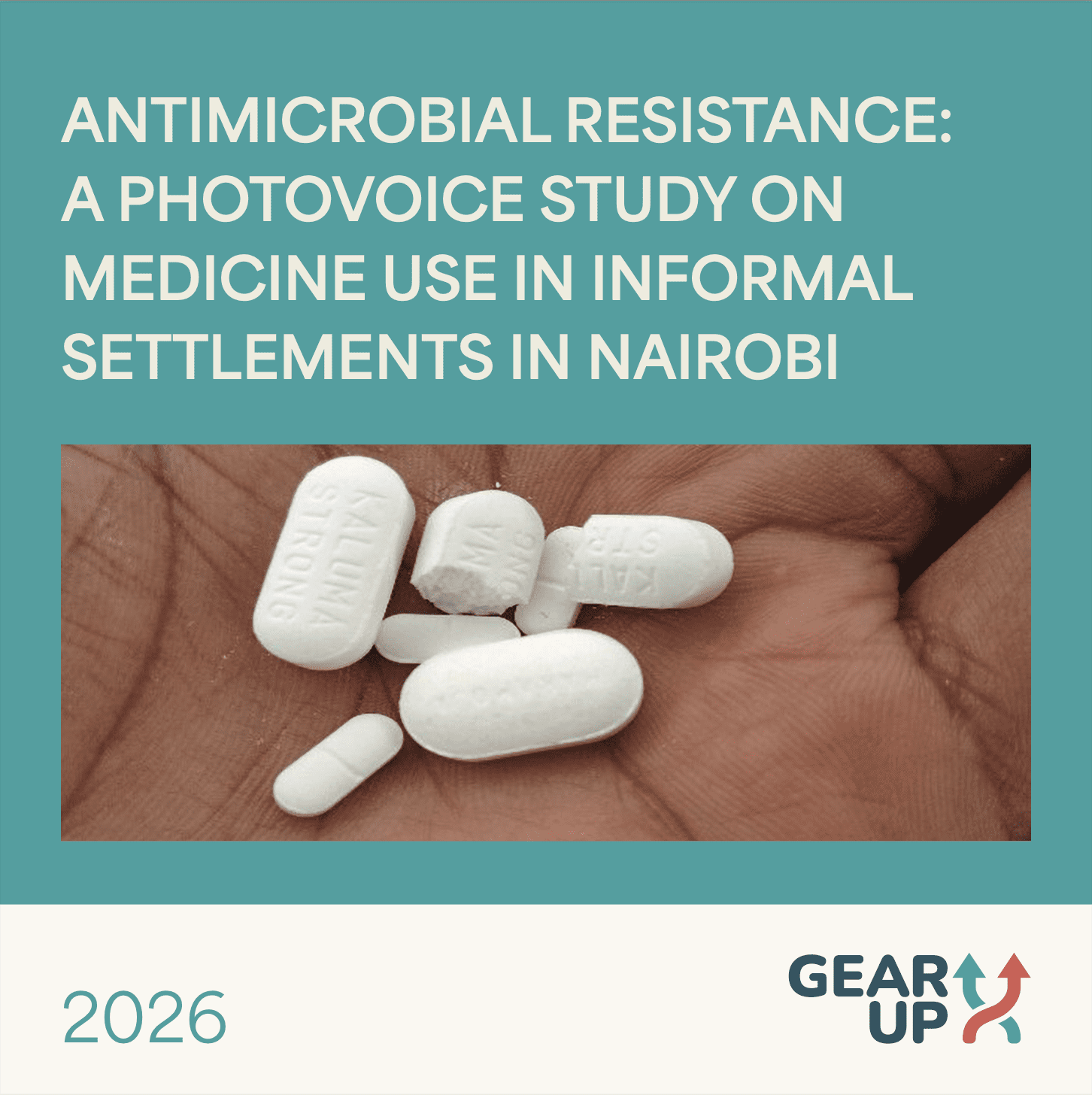
Antimicrobial resistance: A photovoice study on medicine use in informal settlements in Nairobi
What drives medicine use in informal settlements, and what does that mean for antimicrobial resistance?
This photovoice study, conducted by LVCT Health as part of the GEAR Up project, puts community members at the centre of the research. Over three weeks in Nairobi’s Raila Village, residents of Mugumoini Ward documented their own experiences of accessing medicine, seeking advice, and managing leftover drugs through photography and narrative.
The findings reveal a complex, highly social picture of health-seeking behaviour: where people get medicine (often without prescriptions), how they decide what to take, what happens when treatments stop working, and how unused medicines are stored and disposed of. Together, these insights highlight the structural, economic, and social drivers of medicine use, and the gendered dimensions of health decisions within communities facing constrained access to formal healthcare.
Click the image below or this link to download the photovoice study.
The study was conducted by LVCT Health and funded by the Fleming Fund through UK aid, as part of the GEAR Up programme to catalyse action on gender, equity, and antimicrobial resistance in low- and middle-income countries.